
Science
Simple fuel. Serious science.
Your muscles burn carbohydrate fastest when you're working hardest. Your sweat takes salt with it. When either runs low, power, focus and coordination drop. PULZE is built to refill both at the same time.
What's in one sachet
30g
Carbohydrate
250mg
Sodium
80mg
Potassium
30mg
Magnesium
1:0.8
Glucose : Fructose
0mg
Caffeine
01
Why carbohydrate during exercise
Your body stores roughly 400–500 g of glycogen. A hard 90-minute match or a long run can use most of it. Taking in carbohydrate during exercise keeps blood sugar stable, saves glycogen and keeps your decisions sharp late in the game. Research consistently shows 30–60 g per hour improves performance in efforts over an hour, and up to 90 g per hour in efforts over 2.5 hours.
02
Why glucose + fructose
Glucose is absorbed by one transporter (SGLT1), which maxes out at about 60 g per hour. Fructose uses a different one (GLUT5). Combining them lets more carbohydrate in, with less sloshing and fewer stomach cramps. That's why PULZE uses a 1 : 0.8 ratio.
03
Why electrolytes
Sweat contains about 300–1000 mg of sodium per hour of exercise, more in heat and for salty sweaters. Low sodium plus lots of plain water can lead to cramps, fatigue and, in extreme cases, hyponatremia. Sodium also helps you absorb glucose and keep the water you drink.
04
Why gummies
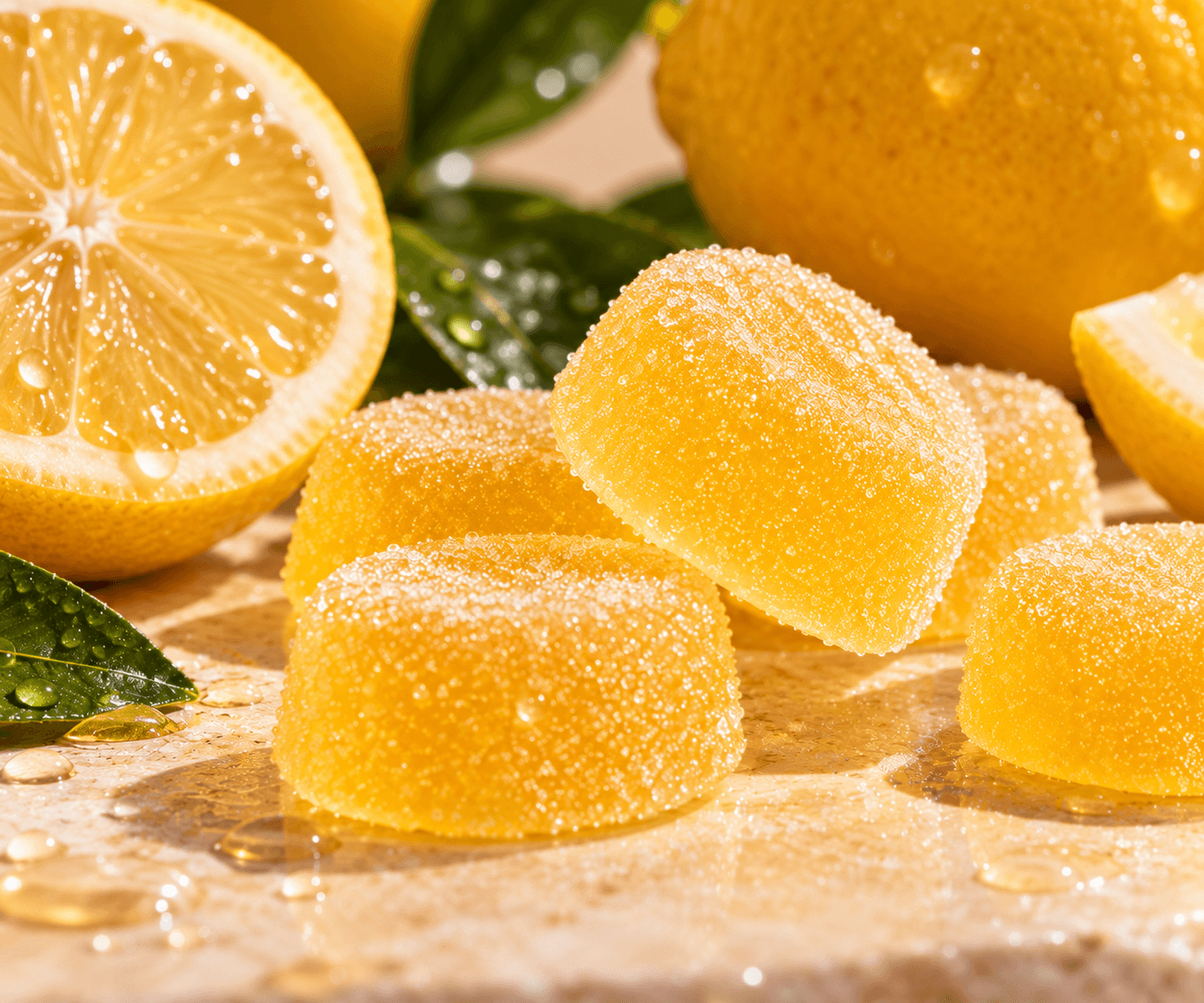
Solid but soft. A gummy is easy to chew, quick to swallow, and lets you dose in small steps: one gummy is 3.75 g of carbs. No mixing, no sticky gel wrappers, no flavor fatigue from the same sweet drink for three hours.
When to take PULZE
Before
2 gummies about 15 minutes before you start.
During
1–3 gummies every changeover, or every 15–20 minutes.
Long efforts
Up to 3 sachets per hour if your gut is trained. Practice it in training first.
Sources
- [1]Thomas DT, Erdman KA, Burke LM. ACSM / Academy of Nutrition and Dietetics / Dietitians of Canada joint position: Nutrition and Athletic Performance. Med Sci Sports Exerc. 2016.
- [2]Jeukendrup A. A step towards personalized sports nutrition: carbohydrate intake during exercise. Sports Med. 2014;44(Suppl 1):S25–33.
- [3]Kerksick CM et al. ISSN exercise & sports nutrition review update. J Int Soc Sports Nutr. 2018.
- [4]Ranchordas MK, Rogerson D, Ruddock A, Killer SC, Winter EM. Nutrition for tennis: practical recommendations. J Sports Sci Med. 2013;12(2):211–224.
- [5]Baker LB. Sweating rate and sweat sodium concentration in athletes. Sports Med. 2017;47(Suppl 1):111–128.
- [6]Sawka MN et al. ACSM position stand: Exercise and fluid replacement. Med Sci Sports Exerc. 2007.
Launching spring 2027
Be first in line.
Join the list. You'll get 15% off your first order and early access before launch day.